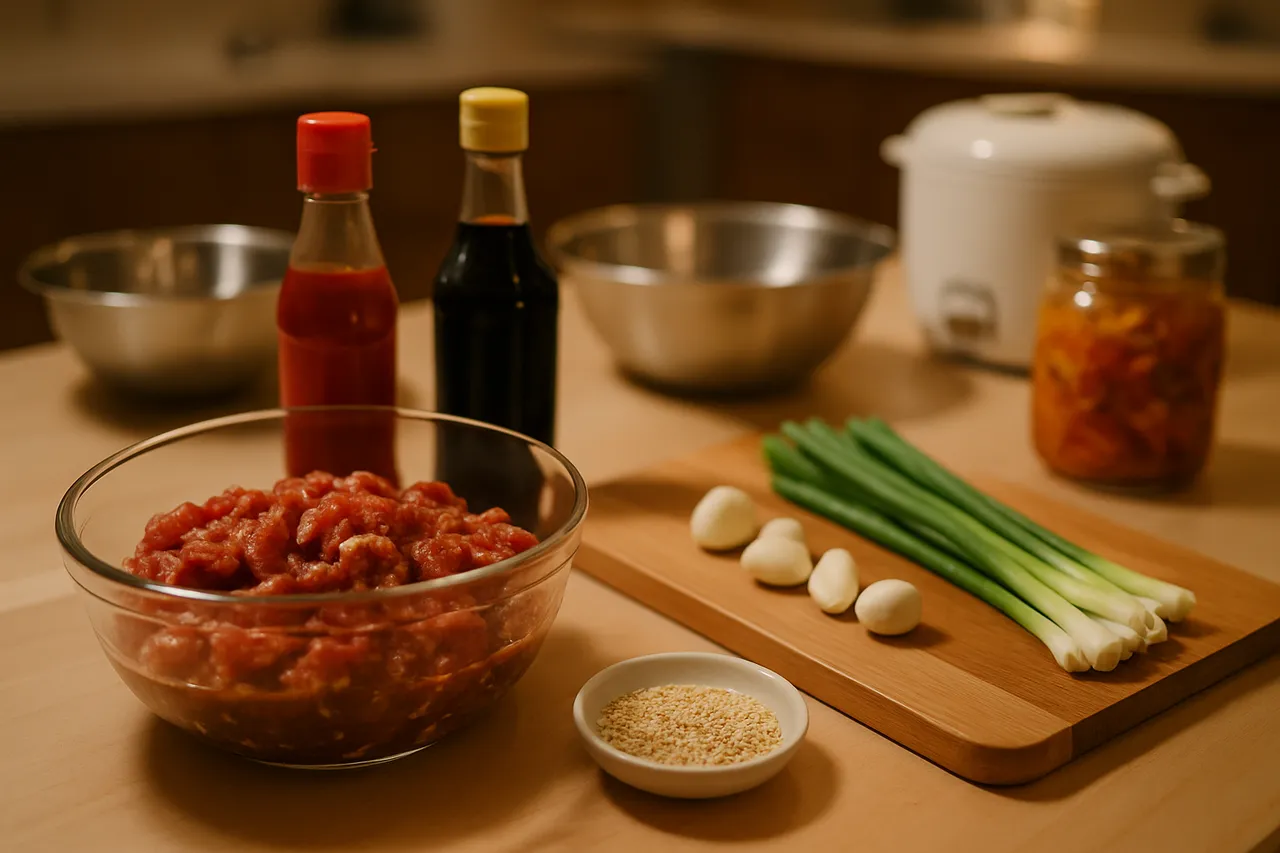
Bulgogi & Beyond: Korean Home Cooking
Here's the thing—Korean food isn't hard, and you don't need a Korean grocery to make it. Over six Tuesdays we'll cover the stuff I actually make on a weeknight: bulgogi and marinades that work, rice done right (people undercook it and blame the recipe), banchan, kimchi you can make or buy, and a pantry list built around Costco, Macey's, and one trip to a Korean grocery up in Salt Lake. I'll show you the substitutions that hold up at 4,600 feet, walk around and fix what you're stuck on, and send you home with recipe cards. You'll leave able to put a full Korean dinner on the table by 6:15. No gatekeeping. Heck yes you can.
What you'll learn
- Cook properly textured rice by rice cooker or stovetop
- Build a bulgogi marinade and substitute cuts confidently
- Prepare quick banchan like namul, potatoes, and cucumber
- Make and store kimchi, then cook with the leftovers
- Plan and time a full Korean family dinner menu
Materials & tools
What to bring
- Heavy skillet or cast-iron pan for searing marinated meat over high heat — $20-40 (a 10-inch cast-iron is ideal for bulgogi)
- Rice cooker, or a heavy pot with a tight-fitting lid, for short-grain rice — $25-90
- Fine-mesh strainer or bowl for rinsing rice until the water runs clear — $6-12
- Two or three medium mixing bowls for marinades and banchan — $10-20
- Box grater or microplane for grating Asian pear, garlic, and ginger into marinades — $8-15
- Sharp knife and a cutting board — $15-40
- Set of airtight glass or plastic containers for storing kimchi and leftover banchan — $12-25
- Measuring spoons and a set of cups — $6-10
- A notebook or the recipe cards provided, to note the high-altitude substitutions
Nice to have
- Digital kitchen scale for weighing rice and meat consistently — $12-20
- Kitchen shears, used constantly in Korean cooking to cut noodles, meat, and kimchi — $8-15
- Small squeeze bottles or ramekins for portioning sauces like ssamjang at the table — $5-10
- Food-safe nitrile gloves for mixing kimchi and handling gochugaru — $6-10
Lessons
- Rice and Stocking the Pantry
Get rice right two ways and gather your Korean pantry from local and specialty stores.
- Bulgogi, Marinade to Plate
Build the marinade, time it, cook the meat, and adapt with substitutions and other proteins.
- Banchan and Make-Ahead Sides
Make the small side dishes that round out a Korean table and store them ahead.
- Kimchi and Fermented Staples
Salt, paste, jar, and ferment your own kimchi, then put it and gochujang to work.
- Main Dishes and the Full Spread
Assemble bibimbap, japchae, and stews, then plan and time a whole family dinner at altitude.
Key terms
- Bulgogi
- Thinly sliced beef (or pork) marinated in a sweet-savory soy, garlic, and sesame sauce, then grilled or pan-seared quickly over high heat.
- Banchan
- The small side dishes served alongside rice at a Korean meal, such as seasoned vegetables, pickles, or kimchi, usually offered several at once.
- Kimchi
- A staple fermented vegetable dish, most commonly napa cabbage salted and seasoned with gochugaru, garlic, ginger, and fish sauce, then left to ferment.
- Gochujang
- A thick, deep-red fermented chili paste made from red pepper, glutinous rice, and soybeans that adds heat, sweetness, and umami to sauces and stews.
- Gochugaru
- Korean red pepper flakes, coarser and less sharp than cayenne, used to color and season kimchi, soups, and many marinades.
- Doenjang
- A savory fermented soybean paste, similar in role to miso, used as the base for stews and dipping sauces.
- Ssamjang
- A thick dipping and wrapping sauce made by combining doenjang and gochujang with garlic, sesame oil, and green onion, eaten with grilled meat and lettuce wraps.
- Namul
- A category of seasoned vegetable side dishes, where blanched or sauteed greens and sprouts are dressed with sesame oil, garlic, and salt.
- Bap
- Cooked rice, the foundation of a Korean meal; short-grain white rice is standard and is rinsed well and cooked to a slightly sticky texture.
- Marinade (yangnyeom)
- The seasoning mixture of soy sauce, sugar or pear, garlic, sesame oil, and pepper that flavors and tenderizes meats like bulgogi before cooking.
Class discussion
- Pinned ·Welcome to Bulgogi & Beyond — a few housekeeping thingsCaroline Son · Instructor · 6 replies
- Pinned ·Say hi before our first Tuesday — Bulgogi & BeyondCaroline Son · Instructor · 26 replies
- Where to find gochugaru before Tuesday's kimchi class?Dianna Chan · 12 replies
- Signing up for Bulgogi & Beyond May 5thKristy Jorgensen · 18 replies
- Before we even touch a stove — what's your rice situation?Caroline Son · Instructor · 17 replies
- Marinade timing — set an actual timerCaroline Son · Instructor · 8 replies
Bulgogi & Beyond: Korean Home Cooking: common questions
What will I learn in the Korean cooking class?
You'll cook Korean home food for a Utah kitchen: bulgogi and its marinade, rice done properly, banchan (small side dishes), kimchi basics, and how to stock a Korean pantry with practical local substitutions. It's taught by a Korean-American home cook, with family recipes and no gatekeeping.
Where can I buy Korean ingredients in Utah County?
Staples like soy sauce, sesame oil, short-grain rice, and gochujang are carried at larger grocery stores such as Macey's and Costco. For a wider selection of Korean ingredients, a Korean or Asian grocery up in the Salt Lake area is worth the trip.
What is gochujang, and how is it different from gochugaru?
Gochujang is a thick, savory-sweet fermented red chili paste; gochugaru is dried red chili flakes. Gochujang builds the deep base of many stews and marinades, while gochugaru adds direct heat and color, for example in kimchi. They're not interchangeable.
Learn more: Gochujang (Wikipedia)
Is bulgogi spicy?
No. Bulgogi's marinade is sweet and savory: soy sauce, Asian pear, a little sugar, garlic, and sesame. It's not chili-based, so it's a good first Korean dish for kids and picky eaters. The thin-sliced beef cooks fast and comes out tender.
Learn more: Bulgogi (Wikipedia)
Do I need special equipment?
No special gear is required to start. A regular skillet, a sharp knife, and a rice pot or rice cooker cover most of the class. One tip you'll hear early: rinse your rice until the water runs mostly clear. It makes a real difference.
More cooking & baking classes
Artisan Pizza Dough and Toppings
with William
Beyond Weeknight Italian: Sauces, Braises, and Fresh Pasta
with Devin
Cake Decorating: Buttercream Basics
with Leslie