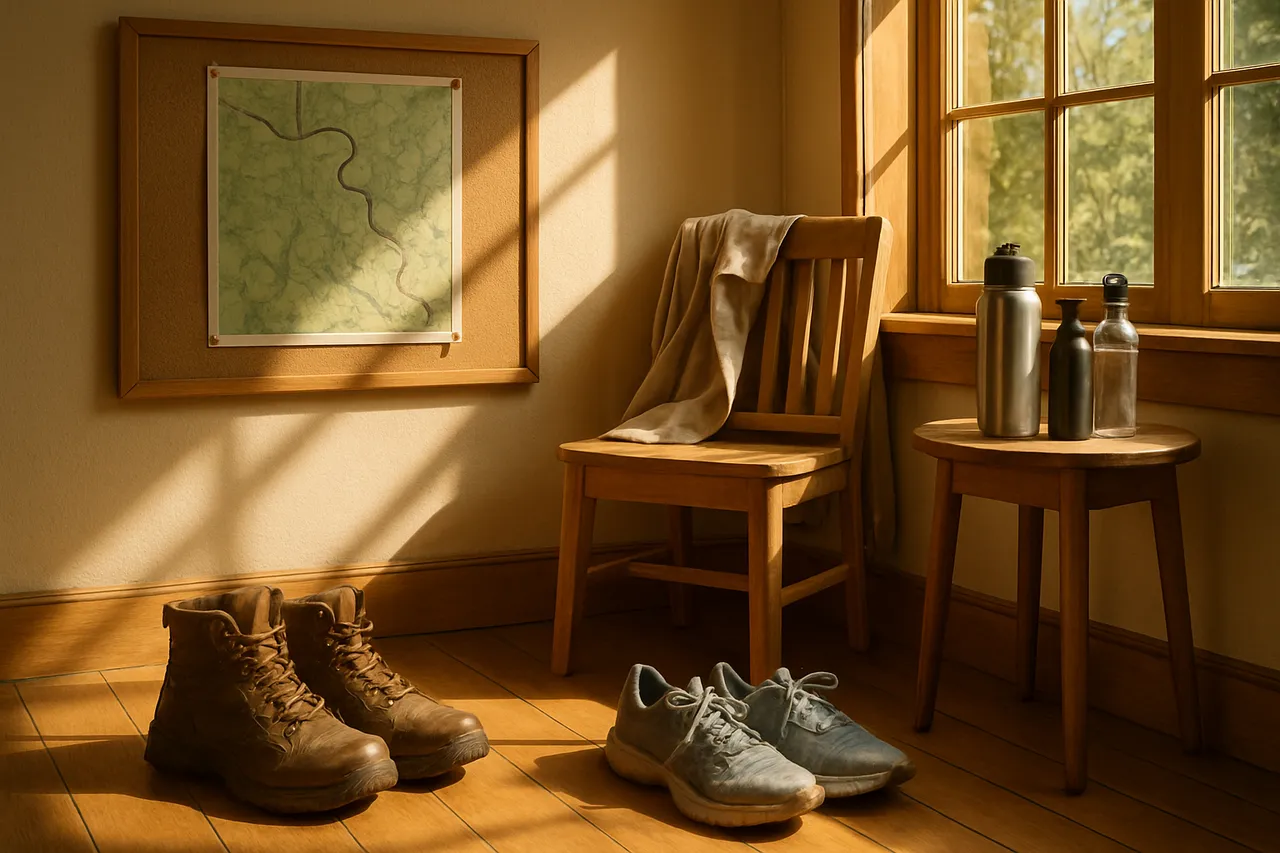
Foothills Walking Group
This is a walking group, not a workout. We meet Tuesdays at 8:00 AM and walk a flat mile-and-a-half loop at the base of the foothills at a pace slow enough to talk the whole way. Rain or shine. I'll modify for actual ice, since I'm a physical therapist and falls are real, but ugly weather isn't a reason to skip.
This is for people who want company and a reason to show up more than they want a burn. If you want to sweat, there are better options and I'll point you to them. You'll leave with a standing appointment, a shorter list of aches, and probably a walking partner or two. Honestly, that's the whole deal.
What you'll learn
- Walk a flat mile-and-a-half loop at conversational pace
- Check your own posture, shoulders, and stride for strain
- Judge weather and footing conditions before heading out
- Recognize when an ache needs a doctor's opinion
- Pace a group walk around its slowest member
Materials & tools
What to bring - Comfortable walking or running shoes with a cushioned sole and good tread — broken-in, not brand-new; $50-90 for a solid pair - Moisture-wicking socks (avoid cotton, which holds sweat and causes blisters) — $8-15 for a multi-pack - Refillable water bottle, 16-24 oz — $5-15 - Layers you can add or shed: a light long-sleeve base plus a wind or rain shell, since foothill mornings run cold — $20-40 for a basic shell - Brimmed hat or cap and sunglasses; the Utah sun is strong even in cool weather — $10-25 - Sunscreen, SPF 30 or higher, for face and neck — $8-12
Nice to have - Slip-on traction cleats (ice grippers) for icy winter mornings — $15-30 - Lightweight gloves and a beanie for cold days — $10-20 - Small waist pack or armband to carry a phone, keys, and a snack — $12-25 - Trekking pole or walking stick if you want extra stability on uneven ground — $20-40 - A phone with a step or distance app if you like tracking your loops (free)
Lessons
- How the group works, and the case for slow
Sets expectations for the group and makes the argument that a slow, unhurried pace is the whole point.
- Posture, gait, and listening to your body
Covers the small mechanical fixes that make walking easier and when an ache means it's time to see somebody.
- Finding a pace nobody has to chase
Settles on a conversational pace built around the slowest walker so no one gets left behind.
- The loop itself: terrain, weather, and surroundings
Walks the actual mile-and-a-half loop and what to expect from footing, dry air, ice, and the foothill landscape.
- Walking and talking, the real reason it works
Explores how conversation and quiet company on the loop carry people through hard things.
- Showing up over time
On consistency, staying in touch, and why the regulars keep coming back.
Key terms
- Moderate-intensity activity
- A pace, like brisk walking, that raises your heart rate and breathing but still lets you hold a conversation; the level most health guidelines recommend.
- Talk test
- A simple way to gauge effort: if you can talk but not sing while walking, you are at a moderate, healthy intensity.
- Cadence
- The number of steps you take per minute; a higher cadence generally means a brisker, more aerobic walk.
- Gait
- Your natural pattern of walking — how your feet strike the ground and your legs and arms move through each step.
- Warm-up
- A few minutes of easy walking at the start that gradually loosens muscles and raises your heart rate before you pick up the pace.
- Cool-down
- A slower stretch of walking at the end that lets your heart rate settle gently instead of stopping abruptly.
- Traction devices
- Slip-on cleats or ice grippers that attach to your shoes to keep you from slipping on ice and packed snow.
- Penguin walk
- A winter-safety technique of taking short, flat-footed steps with your weight centered over your feet to avoid slipping on ice.
- Overuse injury
- Aches or strains, such as shin splints, that come from doing too much too soon rather than from a single fall or twist.
- Active recovery
- Gentle, low-effort movement like an easy walk that keeps you moving and loosens stiffness without stressing the body.
Class discussion
- Pinned ·Week 1: Welcome, and where to parkReed Olsen · Instructor · 14 replies
- Pinned ·Welcome to Foothills Walking Group - say hello before May 5Reed Olsen · Instructor · 8 replies
- Anyone else lose track after the walking group ended?Paul T. · 0 replies
- foothills group ended, one leftover questionDanny Taylor · 1 replies
- Did anyone else's watch make them feel bad this week?Reed Olsen · Instructor · 12 replies
- 6 weeks of Foothills Walking doneHyrum Call · 1 replies
More health & fitness classes
Beginner Yoga for Stiff Mornings
with Kelly
Canyon Trail Walking for Fitness
with Reed
Intermediate Vinyasa Flow
with Amie