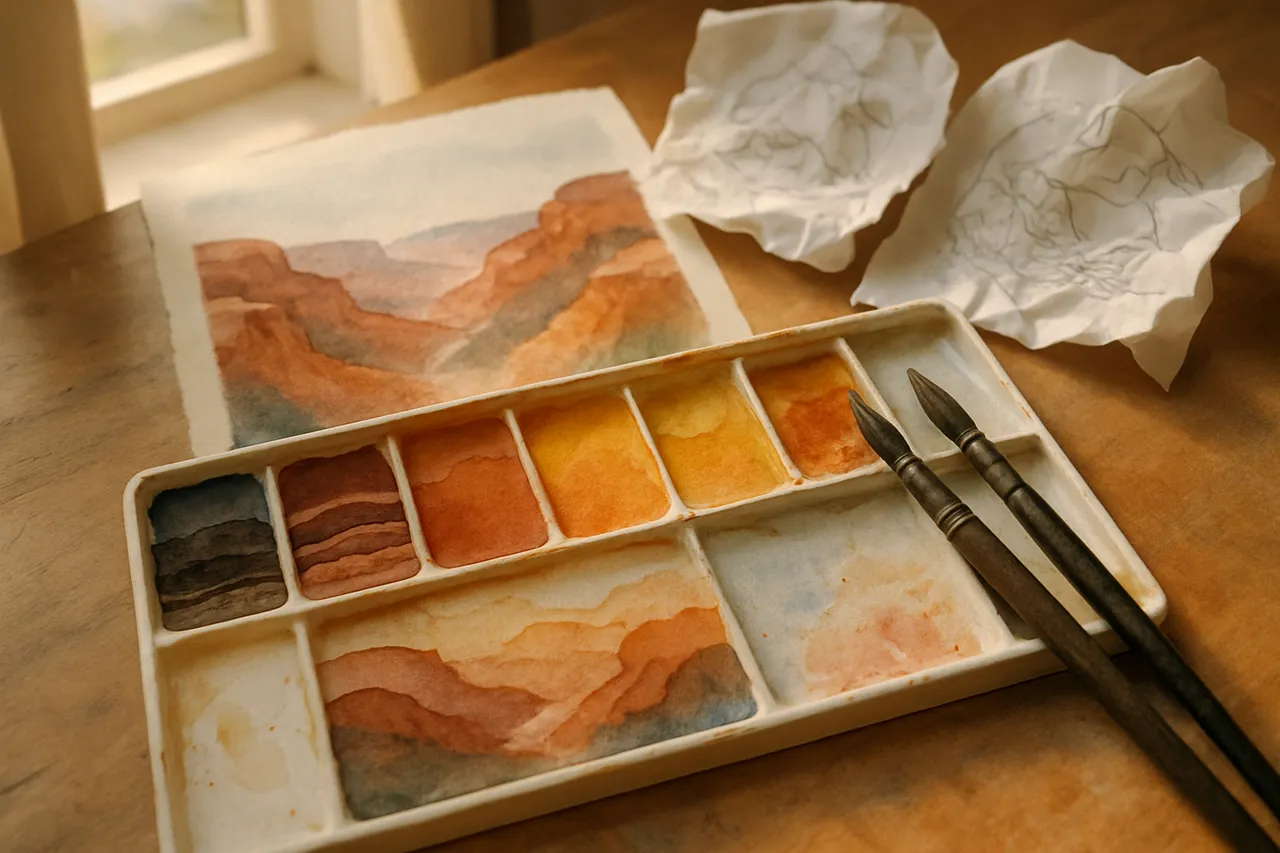
Painting Utah's Canyons in Watercolor: Skies, Stone, and Distance
Utah's canyons and mountains, painted in watercolor the way the dry air actually rewards: wet-on-dry, with strokes you commit to instead of fussing over. We paint red-rock walls, slot canyons, rock spires, and three-plane mountain scenes, spending most of each night with a brush in hand rather than listening. I demo first and talk through the decisions as I work, then circulate and give you one fix at a time.
We'll dig into skies that stay fresh instead of going muddy (flat and graded, both in a single pass), leaving clean whites for clouds without lifting, and pushing depth by setting value ranges front to back and keeping distance cool against a warm foreground. On rock, we read shape before texture and use dry-brush and drag for convincing stone.
You'll also learn to time a second layer against a set first one, adjust for heat and cold air that wreck your dry time, and crop and compose from a photo before you ever touch paint. You'll leave with several finished canyon and mountain paintings and a real sense of timing.
What you'll learn
- Paint wet-on-dry and adjust your timing for dry air, heat, and cold
- Lay flat and graded skies in one pass and leave clean whites for clouds without lifting
- Build depth with three planes, front-to-back value ranges, and cool-distance/warm-foreground color
- Render rock, spires, and slot-canyon walls by reading shape first, then dry-brushing texture
- Crop and compose a scene from a photo, then commit strokes and know when to stop
Lessons
- Getting Reacquainted (and Why Wet-on-Dry)
We reset your assumptions about washes and timing, because most of the frustration people bring in is really a dry-air problem.
- Skies That Read
The sky is where beginners die, so we practice fewer strokes, committing, and walking away.
- Layers, Not Detail
We build separation between foreground, midground, and background, which is what actually makes a landscape read.
- Rock, Walls, and Canyon Texture
We paint the stuff I actually like painting: layered rock and the way light sits on a canyon wall.
- Trees, Timing, and Committing
Pines, edges, and the intermediate leap of laying down a stroke you can't take back.
- Composing a Finished Painting
We work from reference photos, plan the composition, and take a full scene all the way through.
Class discussion
More arts & crafts classes
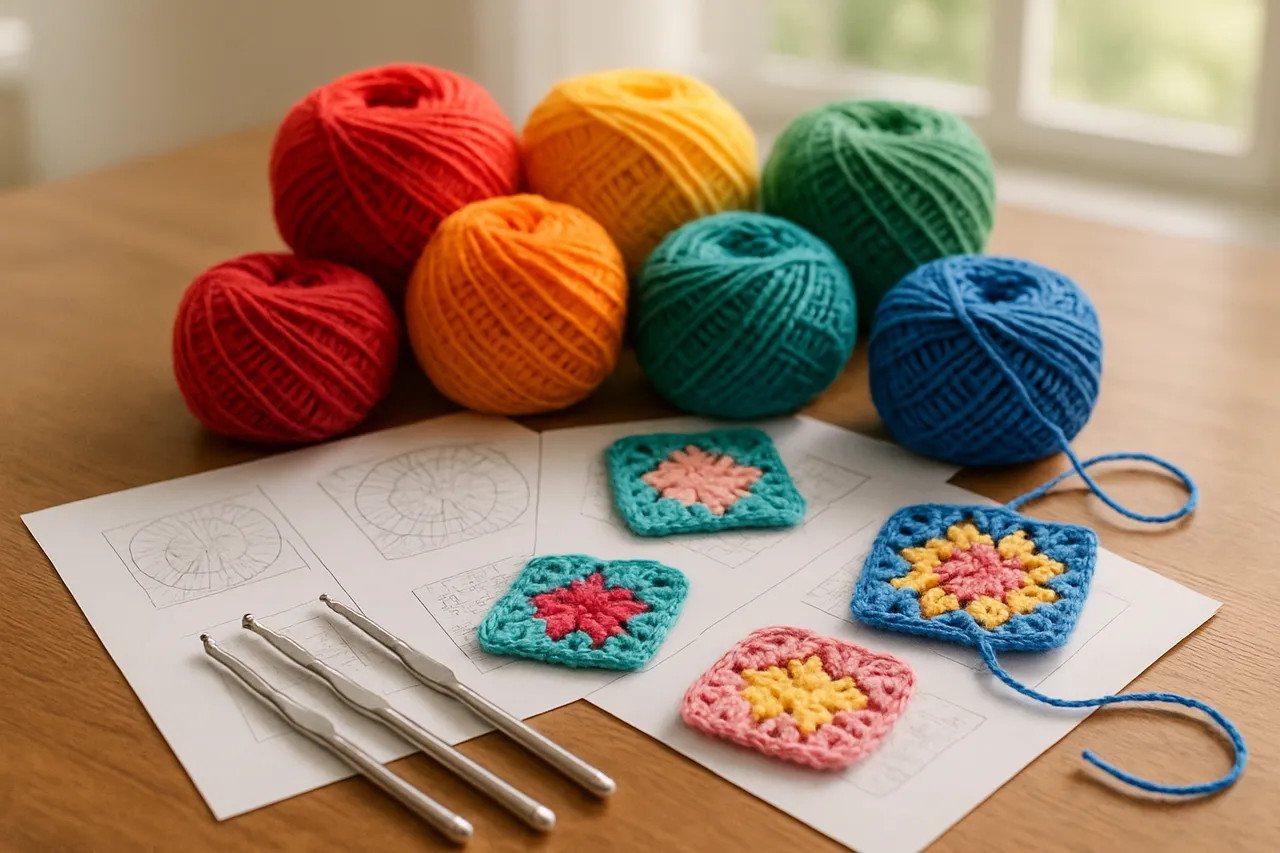
Beginner Crochet
with Marilyn
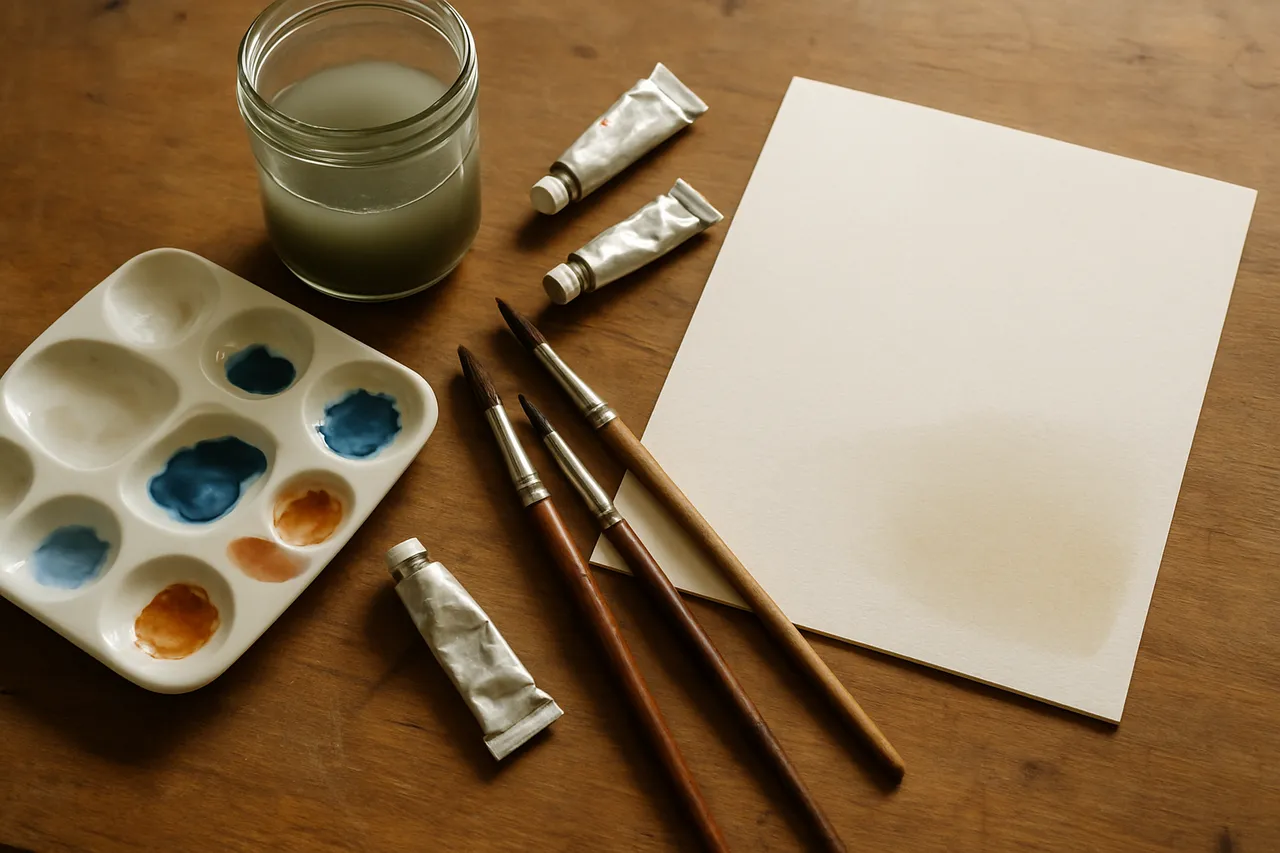
Beginner Watercolor Painting
with Elizabeth

Free-Motion Quilting: Finish a Lap Quilt on Your Home Machine
with Morgan