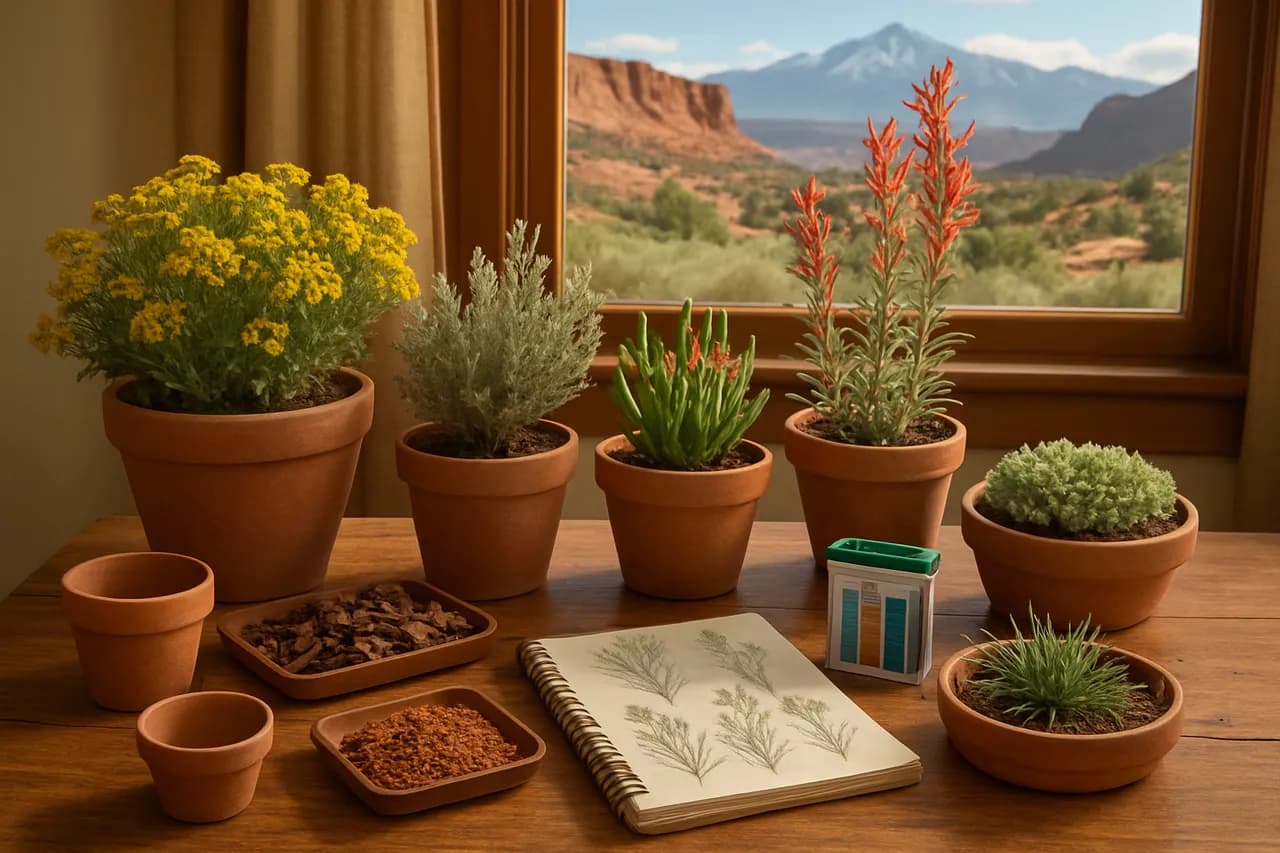
Drought Tolerant Plant Selection
This is the next step after a beginner xeriscape class. You've heard the word "xeriscape," maybe killed a few plants (welcome, so have I), and now you want to actually PLAN a bed for your own yard.
We'll go deeper into plant choices for Utah County: which natives shrug off our alkaline, hard-water soil, when things actually bloom, and how to fill the August gap so your yard isn't dead-boring by mid-summer. Bring photos of your yard, your sun and shade situation, and any measurements you've got.
You'll leave with a real planting layout you can dig in this fall, a plant list that fits your dirt, and a much better sense of how little water these plants really want once they're established.
What you'll learn
- Assess your yard's sun, shade, and soil conditions
- Select drought tolerant plants suited to your dirt type
- Plan bloom time sequences to avoid gaps in color
- Sketch a planting layout using real measurements and mature sizes
- Water new plants correctly during establishment without overdoing it
Lessons
- Where You're Starting From
We figure out what you're actually working with in your own yard before we pick a single plant.
- Our Dirt Is the Problem (and It's Fine)
Utah County soil is alkaline, hard, and clay-heavy, and we plan around it instead of fighting it.
- Natives That Handle Our Valley
The tough, alkaline-tolerant natives and adapted plants that survive here without babying.
- Penstemons: gorgeous, and the thing I drowned in two weeks20 min
- Yarrow, globemallow, and blanketflower for the awful native dirt22 min
- Rabbitbrush and other shrubs that carry a bed18 min
- Ornamental grasses (which I have to look up every single time)15 min
- Adapted non-natives worth your space, like lavender18 min
- Planning for August, Not May
Anybody can have a pretty yard in spring, so we build for the ugly hot part of summer.
- Watering, Mulch, and Not Killing Things
How to establish new plants and then back way off, which is the part nobody can stand to do.
- Draw Your Actual Layout
You leave this class with a real planting plan you can dig in this fall.
Class discussion
More home & garden classes
Basic Home Repair for New Homeowners
with Bryan
Cold Frames & Row Covers: Growing Past the Frost
with Debbie
Houseplant Basics
with Miranda