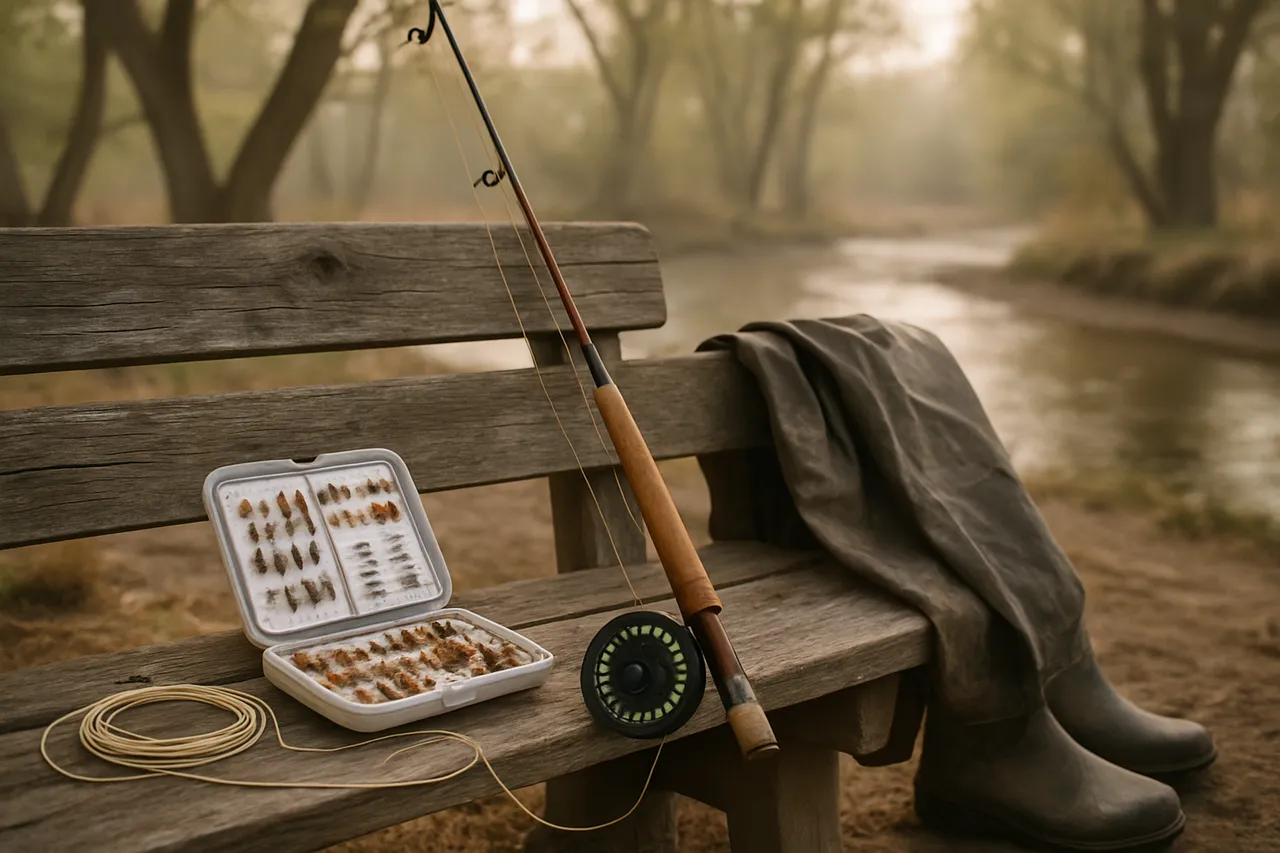
Beginner Fly Fishing on Utah Rivers
Here's the thing, you don't need fancy gear or years on the water to start fly fishing. You need to know where the fish sit, one knot you can tie cold, and a cast that puts the fly where it needs to go at a normal range. That's what we do, mostly from the bank on the Provo, on Saturday mornings.
This is for adults and teens who've never picked up a fly rod. Absolute beginners. We'll read water, tie the clinch knot until your fingers get it, practice casting, and talk about the special-regs stuff before you show up on your own.
You'll leave having actually done it with your hands, and feeling like you could come back next Saturday by yourself. That counts as a good day.
What you'll learn
- Tie a clinch knot from memory
- Identify seams, riffles, and trout holding spots
- Cast overhead accurately from the riverbank
- Follow Provo River regulations and catch and release rules
- Rig gear and land fish safely on your own
Materials & tools
What to bring
- Fly rod, 9 ft 5-weight — the all-around choice for Utah trout; a rod/reel/line combo kit runs $80-150 and is plenty to learn on
- Fly reel pre-spooled with weight-forward floating line, matched to a 5-weight — usually included in a combo kit
- Tapered leaders, 9 ft, 4X or 5X — $2-4 each; bring 2-3 since they get shortened over time
- Tippet spools, 5X and 6X — $4-6 per spool; for extending leaders and tying on flies
- Basic fly assortment — a few nymphs (Pheasant Tail, Zebra Midge, size 16-20) and a couple dry flies; $2-3 each or a starter box of a dozen
- Nippers or small nail clippers — $5-10; for trimming knots and tippet
- Forceps / hemostats — $6-10; to back a barbless hook out of a fish's mouth quickly
- Polarized sunglasses — $15-40; cut glare so you can read the water and protect your eyes from the fly
- Utah fishing license (age 12+) — required by law; a 1-day license is about $16 and a resident annual is roughly $40, purchased from Utah DWR
Nice to have
- Chest pack or sling pack — $25-50; keeps tippet, flies, and tools in reach on the bank
- Floatant (gel or powder) — $5-8; keeps dry flies riding on the surface
- Small assortment of split shot — $4-6; adds weight to sink nymphs
- Rubber-mesh landing net — $20-40; safer for catch-and-release than dry hands
- Wading boots or old sneakers with felt/rubber soles — for stepping to the water's edge; full waders are optional for bank fishing in warm months
Lessons
- Gearing up and staying safe before you fish
What to buy, the rod and line basics, and how to stay safe wading a cold Utah river.
- Welcome, and why I got hooked (the pun is on purpose)15 min
- What you need and what you really don't20 min
- Reading water beats a $900 rod, here's why20 min
- Provo rules before you show up: special regs and catch and release15 min
- Meet the rod, reel, line, and leader without the jargon20 min
- That river is colder and pushier than it looks15 min
- Where NOT to step, and why waders are optional for you20 min
- Watch your backcast so you don't hook a neighbor15 min
- Dressing for the canyon: dry air, sun, and layers10 min
- Knots, reading water, and where trout hold
Tie the clinch knot, pinch your barbs, and learn to spot the water fish actually sit in.
- Why I make you learn the knot first15 min
- The clinch knot, step by step, slowly25 min
- Practice until your fingers remember it25 min
- Pinch down every barb, no argument15 min
- Seams, riffles, and slow spots in plain words20 min
- Where a trout wants to be and why20 min
- Walking the bank and spotting the good water together25 min
- A few flies I trust (and why I ask the fly shop the rest)20 min
- The overhead cast, step by step
Build a clean basic cast and fix your timing one thing at a time.
- Rigging up and fishing on your own
Put it all together, fish a real spot, and land your first trout solo.
Key terms
- Tippet
- The thin, nearly invisible final section of line tied between the leader and the fly, chosen thin enough not to spook fish but strong enough to land one.
- Leader
- A tapered length of clear monofilament that connects the thick fly line to the tippet, transferring casting energy so the fly lands gently.
- Nymph
- A fly that imitates the underwater larval stage of an aquatic insect and is fished below the surface, where trout feed most of the time.
- Dry fly
- A fly designed to float on the water's surface, imitating an adult insect that a trout rises up to eat.
- Improved clinch knot
- A simple, reliable knot used to tie the fly onto the tippet, and one of the first knots a beginner should be able to tie by feel.
- Dead drift
- Letting the fly float downstream at exactly the speed of the current with no drag from the line, so it looks like natural, free-floating food.
- Mending
- Flipping the fly line upstream or downstream after the cast to remove the belly of slack, which prevents drag and keeps the fly drifting naturally.
- Reading water
- Interpreting a river's surface to find where trout hold, such as seams, riffles, runs, and pools that offer food and shelter from the current.
- Rod weight
- A number (a 5-weight is standard for Utah trout) that rates how heavy a rod and its matching line are, determining what size flies and fish it handles well.
- Catch and release
- Landing a fish quickly, handling it with wet hands, and returning it unharmed to the water, which is required in many special-regulation stretches of the Provo.
Class discussion
- Pinned ·Welcome! Class starts May 9 - introduce yourselfGilbert Boyle · Instructor · 21 replies
- Reading riffles vs actual fish - anyone else struggling?Dylan Romney · 0 replies
- Anyone else's clinch knot just... fail?Dylan Romney · 0 replies
More outdoors & recreation classes
Dutch Oven Camp Cooking Basics
with Kelli
Fly Tying for Utah Trout Streams
with Gilbert
Hiking the Wasatch: Trail Planning and Fitness
with Kelli